
In partnership with

Kelsey Ogletree's husband, Derrick, runs the demo calls for Pitchcraft, the platform they built to connect PR professionals with journalists. Prospects almost always ask the same question: how many journalists do you have?
The answer is 750. All national, all vetted.
And some prospects push back: I want 10,000.
Kelsey's response is the reason I am writing about her today. "You can't know 10,000 people. Why won't you focus on 100 that could make the biggest impact for your clients? Your circles need to get deeper and stronger, and not just this ever-expanding wider net just for the sake of building lists."
Deeper, not wider. Every piece of research I have covered this year has been pointing at it from a different direction.
Magid found that "trustworthy" now ranks 39th out of 44 attributes audiences attach to news brands, and that the fix is not more coverage but a recognizable voice cutting through the noise. Reuters found that people who actually use news creators rate them 20 points more trustworthy than traditional media, and the mechanism is depth: a person who covers a specific thing for a specific community. Pew found that 77 percent of news influencers have never worked for a news organization, and audiences follow them anyway, one niche at a time. And last week I showed you six local journalists who earned trust in hard places by covering less, not more.
The audience research says narrow wins. The newsroom evidence says narrow wins. Kelsey is the first person I have interviewed who can prove the same law holds on the other side of the business, among the people trying to earn coverage.
Make Tax Season Simple

Tax season doesn't have to mean wondering if you have the right forms, second-guessing your deductions, or scrambling to pull everything together before the deadline.
With BELAY’s tax prep support, you can approach tax season with confidence. Stay organized with one centralized place to gather and check off your documents, keep track of valuable deductions like HSA contributions and education expenses while leaning on experienced professionals who make tax preparation accurate, efficient, and completely hands-off.
Download BELAY's free Personal Tax Checklist and start preparing with confidence, today.
The woman between the two sides
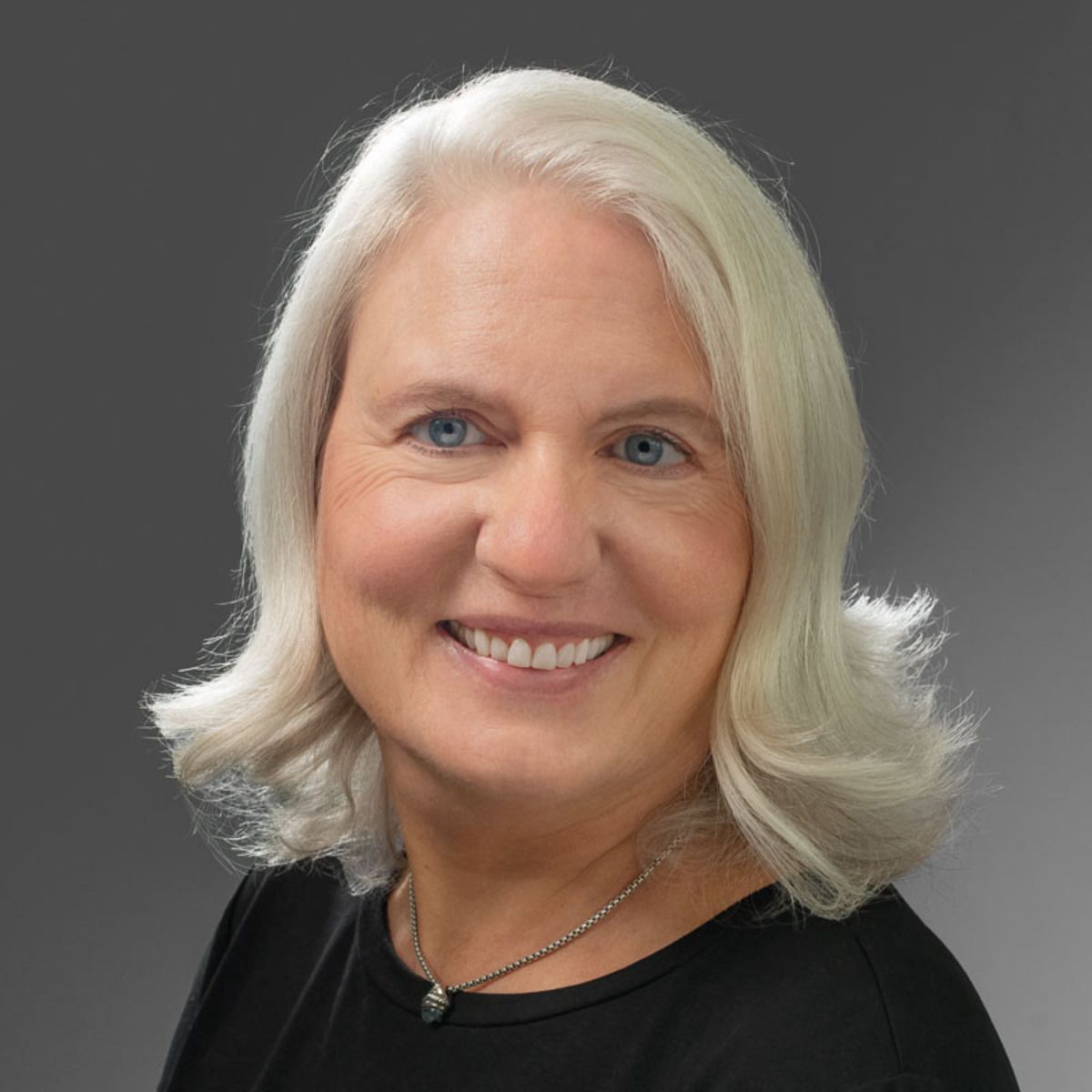
Kelsey is a Medill-trained journalist who spent seven years as an editor, then went full-time freelance in 2018. Along the way, she noticed a gap nobody talked about: PR people did not know how journalists actually worked, and journalists never told them. So she started a newsletter called Long-Term Relationship that explained exactly how to work with her. How she reviewed pitches. What she needed for images. What a good query looked like. Readers kept telling her the same thing: I wish more freelancers would do this, because we do not know how you work.
During the pandemic, she started free 20-minute Zoom calls about how she was covering travel when nobody could travel. They kept filling up. She converted them to paid, about 200 dollars for a month of events, and they sold out every month. In December 2021, she and Derrick launched Pitchcraft through that newsletter. She still has a video of herself pressing send on the launch email, terrified. One member signed up at $ 349 a month. A couple of months later they had 20. They have rebuilt the platform twice since, the second time with a two-woman development team because the first team thought in code and Kelsey wanted it to feel like a conversation.
Today she describes Pitchcraft as the trust layer of the earned media ecosystem. By the end of this issue, I think you will see why.
The math that broke the wide net
In 1980 there were about two PR people for every journalist in this country. By 2008 it was three to one. The latest Bureau of Labor Statistics data puts it at seven to one. A journalist might see 300 pitches in a week. I asked Kelsey how many are actually worth reading and tailored to the person receiving them. "Probably 20 or less."
The rest is arithmetic meeting biology. "No one can sit down and literally go through 300 emails and make a decision about what to do with each one," she told me. "We're not built scientifically to have that kind of brainpower to make that many decisions."
So, what gets through? Not the cleverest subject line. A name. "That journalist is going to scan their inbox and see, okay, I know this name. I've worked with this person before."
The wide-net era taught PR that anybody could find anybody's email address, and a good idea did not need a relationship attached. Kelsey watched that logic die. "The chances of you getting lucky enough to send the right idea to the right person at the right time with a completely cold relationship are really diminishing," she said. "It sounds old-school, but public relations was built on these people connections." It was built on trust. The industry spent a decade pretending otherwise, and the inbox called the bluff.
Proof of human
Here is where Pitchcraft gets interesting for anyone thinking about trust as a system rather than a sentiment.
Journalists join free, but the bar is high, and Kelsey is, in her words, honestly proud of that. Her team reads every applicant's social feeds. Trashing PR or the industry is a no. Politics is a no. Profanity is a no. Covering a beat outside the community's wheelhouse is a no, because the fit will not pay off for anyone. And then there is the rule that tells you everything about where media is in 2026: every journalist has to record an intro video or appear at a live event. No exceptions.
"I need them to be on camera talking so that I know they're real, so that other people know they're real," she said. Someone unwilling to show up as themselves "creates an unsafe layer in a community."
Sit with that. Showing your face has become the press credential. Kelsey says both sides are joining for the same reason: "They are just craving that human connection in the sea of AI slop." AI can generate a media list in 30 seconds. It cannot know that a writer has two young kids who travel with her, or a scuba certification that makes her perfect for one specific story. "AI is never going to be able to help you do that."
The currency
I asked Kelsey the question I most wanted answered: what is the big currency in PR right now? When a publicist earns a journalist's trust, what did they actually do?
Her answer was authenticity, but defined operationally, not as a vibe. "You're not engaging with someone as a strategy, but because you genuinely want to interact with them."
It looks like advocacy. A PR pro in her community told her years ago that at the end of the day, the journalist is her client, not the client. Then she proved it. Kelsey could not cover a hotel opening without her two small children along, so the publicist went back to her client, made the case, and got the budget to bring Kelsey's whole family. "She advocated for me."
It looks like getting off email. Voice notes, quick calls, a Zoom when it matters. A publicist Kelsey has known for five years recently called her instead of emailing about an exclusive, talked it through in minutes, and sent a thank-you afterward.
It looks like credit. "Whenever I see PR people post a story and say we earned this for our client, I'm like, tag the writer. Why is the writer not here? They made this happen, not the publication." Read that sentence again. That is the migration of trust from logos to individuals, stated from the PR side of the table.
And it looks like restraint. That same publicist never pitches Kelsey unless the fit is right, which means her name in the inbox is a signal all by itself. "If she has a great fit for me, it comes to me, and we work together." In an inbox of 300, a trusted name is the only filter that scales.
The fastest ways to lose the currency are just as concrete. Do not deliver what you promised. Reschedule three times at the last minute. "I deleted it from my calendar. I don't have time for people like that."
Trust travels with the person
A former Harper's Bazaar editor and Vogue reporter recently joined Pitchcraft with a brand-new Substack called The New Front Row and a few hundred subscribers. Natasha Silva-Jelly was in without hesitation. "She's someone who people already know, and she has that credibility and trust." Kelsey has followed Cup of Jo and Camille Styles from their blogs to their Substacks and pays for both, for the same reason. The trust attaches to the person and moves when they move.
And it does not care about scale. Kelsey would rather admit a 1,000-subscriber newsletter with real comments and real replies than a generalist with big reach and no engagement. She is watching brands lean into micro and nano influencers with tiny, devoted audiences while mega-influencer culture deflates. Her own numbers make the point. Pitchcraft's Instagram has fewer than 1,000 followers, "and every single one of them is a journalist or a PR pro who is in lifestyle media. I'm proud of that." Then the sentence that should be printed out and taped to every growth dashboard in America: "Growth for the sake of growth is unimportant now."
At the end of our conversation, she told me about a young founder with a genuinely good product who bought someone else's 25,000-follower meme account and swapped in his company's handle. Every post was getting two likes. He asked her if it was really a bad look. "Yeah, I do. I think it's terrible. It honestly makes me distrust you a little bit."
Consumers see through it, she says, and they get smarter every year.
What this means for you
If you work in PR or communications: your list is not the asset. Your relationships are. A hundred people who trust you will outperform ten thousand contacts who do not know you exist, and the 100 is buildable. The 10,000 never was.
If you are a journalist, staff or independent: your name is the credential now. Show your face. Keep your promises. Build circles deep enough that opportunity gets routed to you by people who know you are real.
Kelsey said something in passing that I think is the whole ballgame: "I don't think there's a playbook to relationships. I think it's about just showing up as your authentic self and having conversations around topics that matter."
Deeper, not wider. The research says it. The market says it. And the person who built the trust layer of earned media bet her company on it.
Where are you still going wide when you should be going deep?
Hit reply and tell me. I read every one.
P.S. If Kelsey's world is your world: Pitchcraft is free for qualifying journalists and open to PR professionals here.